
How to adjust the marking contrast of a CO2 laser marking machine?
Oct 20, 2025
Leave a message
As a supplier of CO2 laser marking machines, I understand the importance of achieving optimal marking contrast. In this blog post, I will share some practical tips on how to adjust the marking contrast of a CO2 laser marking machine.
Understanding the Basics of CO2 Laser Marking Contrast
Before diving into the adjustment methods, it's essential to understand what marking contrast is and what factors can affect it. Marking contrast refers to the difference in appearance between the marked area and the unmarked area on the material surface. A high - contrast mark is clear, visible, and stands out, while a low - contrast mark may be faint or difficult to distinguish.
Several factors can influence the marking contrast of a CO2 laser marking machine:
- Laser Power: Higher laser power generally results in darker and more prominent marks, but too much power can cause damage to the material.
- Marking Speed: Faster marking speeds may lead to lighter marks, while slower speeds allow the laser to interact with the material for a longer time, potentially increasing the contrast.
- Frequency: The laser frequency affects the energy distribution of the laser pulses. Different materials may require different frequencies to achieve the best contrast.
- Material Properties: The type, color, and surface finish of the material play a crucial role. For example, porous materials may absorb the laser energy differently from smooth materials, affecting the marking contrast.
Step - by - Step Guide to Adjusting Marking Contrast
1. Set the Initial Parameters
When starting a new marking job, it's a good practice to refer to the material's specifications and the machine's user manual. Set the initial laser power, marking speed, and frequency based on the recommended values. For instance, if you are marking on a leather material, you can check our CO2 Laser Marking Machine for Leather page for some general guidelines.

2. Test Marking
Perform a test mark on a scrap piece of the same material. This allows you to evaluate the initial marking contrast and make adjustments without wasting the actual product. Place the test piece on the marking table and run the marking program.
3. Adjusting Laser Power
If the mark is too faint, you can gradually increase the laser power. However, be cautious not to increase it too much at once, as this can cause over - marking, such as burning or charring the material. Start with small increments, for example, 5% - 10% increases each time. If the mark is too dark or the material is being damaged, reduce the laser power accordingly.
4. Modifying Marking Speed
If increasing the laser power doesn't improve the contrast satisfactorily, you can try adjusting the marking speed. Decreasing the marking speed gives the laser more time to interact with the material, which can enhance the contrast. Conversely, if the mark is too dark and the material is being over - processed, increasing the marking speed can be a solution.
5. Changing Frequency
The frequency of the laser can also have a significant impact on the marking contrast. Some materials respond better to higher frequencies, while others may require lower frequencies. Experiment with different frequency settings and observe the changes in the marking contrast. You may need to make multiple test marks to find the optimal frequency for your specific material.
6. Consider the Material Surface
If the material has an uneven surface, it can affect the marking contrast. You can try to prepare the surface before marking. For example, cleaning the surface to remove any dirt, oil, or debris can improve the laser - material interaction. In some cases, sanding or polishing the surface slightly can also help achieve a more consistent marking contrast.
Troubleshooting Common Contrast Issues
1. Inconsistent Contrast
If you notice that the marking contrast is inconsistent across the marked area, it could be due to uneven laser power distribution or an issue with the marking head. Check the alignment of the laser beam and make sure the marking head is clean and properly calibrated. You may also need to adjust the focusing lens to ensure a uniform laser spot size across the marking area.
2. Low Contrast on Specific Materials
Some materials are more challenging to mark with high contrast. For example, light - colored or reflective materials may require special techniques. You can try using a coating or a pre - treatment on the material to enhance the laser absorption. Another option is to adjust the laser parameters more aggressively, but be careful not to damage the material.
The Role of Machine Quality
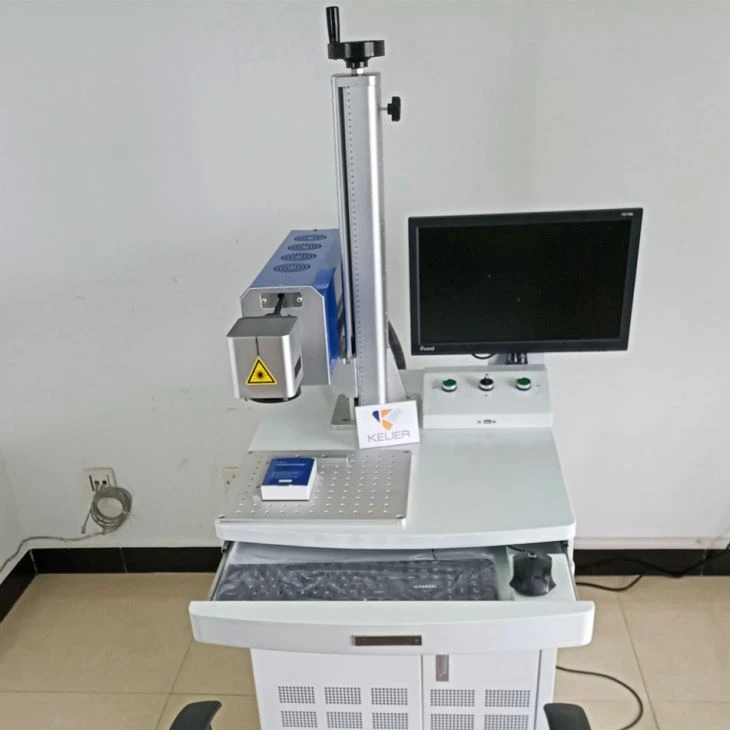
The quality of the CO2 laser marking machine itself also affects the marking contrast. A high - quality machine with precise control over laser parameters and a stable laser source is more likely to produce consistent and high - contrast marks. Our CO2 Cabinet Optical Fiber Laser Marking Machine is designed with advanced technology to ensure accurate and reliable marking results.
Cost - Efficiency and Marking Contrast
When adjusting the marking contrast, it's also important to consider the cost - efficiency. Higher laser power and slower marking speeds may increase the contrast but also consume more energy and take longer time. You need to find a balance between achieving the desired contrast and minimizing the production cost. If you are concerned about the cost of the CO2 laser marking machine, you can visit our Co2 Lasermarking Machine Price page for more information.
Conclusion
Adjusting the marking contrast of a CO2 laser marking machine requires a combination of understanding the material properties, mastering the machine's parameters, and troubleshooting common issues. By following the steps outlined in this blog post, you can achieve high - quality, high - contrast marks on a variety of materials.
If you are in the market for a CO2 laser marking machine or need further assistance with marking contrast adjustment, feel free to reach out to us. Our team of experts is ready to provide you with professional advice and support to meet your specific marking needs.
References
- Laser Marking Handbook, Various Authors
- CO2 Laser Technology Research Papers, Industry Journals
Send Inquiry